
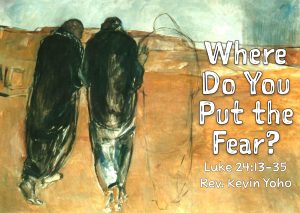

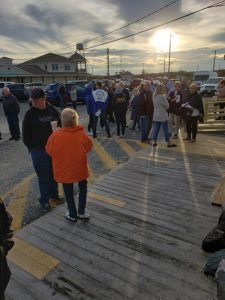
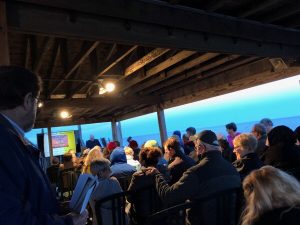
 What did the Resurrection of Jesus Christ from the dead mean to two fearful disciples on the road to Emmaus? Find out at Sunset Beach when we gather at 6:15 AM for our third annual sunrise service on the deck at the Grill. Uplifting music, message, and great breakfast refreshments will help you start your day in joy!
From Cold Spring Presbyterian Church’s annual Easter Sunrise Service at Sunset Beach, Cape May Point, New Jersey, April 21, 2019. Larry Moyer sings “Then Came the Morning” with Jayne McDonough, accompanying.
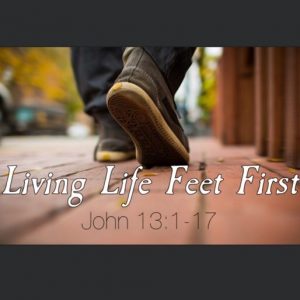 Jesus used foot washing to show several lessons: Hospitality and serving is a mission of Jesus’ followers. The faith community, the host: 1. must take care of their guests. 2. Always serve. Serve others in worship, teaching, dinners, teams, groups, and every interaction with the community. 3. When we serve, our feet will get dirty.
The only way our feet will be dirty is if we go somewhere! So let’s get our feet, and our hands, dirty in serving our community generously! Then, we will look most like Jesus who came to seek and to save everyone who has lost their way.
Where will your feet take you today in service to others?!
“How beautiful are the feet of those who bring good news!” (Romans 10:15).
 According to the
 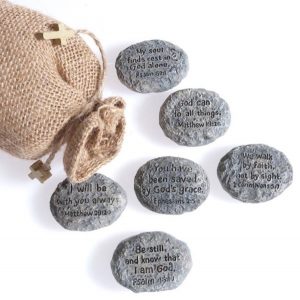 Did you know stones could sing? Yes, they can! When Jesus entered Jerusalem, he was welcomed as King. People were pretty excited, it was a red carpet experience that everyone celebrated. Well, almost everyone. A group of fake-religious leaders called Pharisees criticized Jesus and told him to stop the festivities! Imagine that. They wanted to stop the Jesus party. The children were singing, “Blessed is the one who comes in the name of the Lord!,” chanting this over, and over as God’s promises spoken long ago were being realized then and there. Jesus said, no way! Even if I told them to keep quiet, the stones themselves would start to sing! Yes, singing stones, because all creation, everything that God made, the universe and all that’s in it—including you!, are designed to enjoy God’s presence and sing God’s praises. Take a look in the special Holy Week burlap pouch… Look! Singing stones! Stones with words of Scripture on them. Would you pick one and read it to us so we can hear the stones sing? Read more stones. Go ahead, and choose your favorite stone and keep it as a reminder that God loves you and shows his love through you. God will help you to sing through your life as you follow Jesus, just like these stones. Blessed in the one who comes in the name of the Lord!
 When is the last time you described something as
 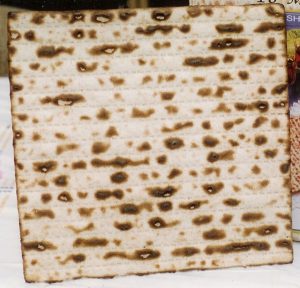 You know the difference between something that is plain, and something that is extravagant? Plain is good. Taking something that is plain and turning it into extravagant takes time, energy and attention. Consider matza. Do you know what matza is? Sure, it looks like a cracker. Kinda boring. But tasty! Why do some churches use plain, flat, crackers, matza, like this for communion at the Lord’s Table? Where did matza come from?